

“Beyond Labels: Unshackling Women from the ‘Working Woman’ Stereotype”


In a world of today where progress is celebrated and societal evolution is heralded, there remains a linguistic relic that stubbornly reflects the biases of another era: the term working woman. Rarely do we hear its counterpart, working man, in the common parlance—an omission that is not mere oversight but a stark indicator of how deeply traditional gender roles still permeate our language. The phrase, seemingly harmless, is laden with assumptions, suggesting that a woman’s entry into the workforce is an exception that must be categorized, even scrutinized. Beneath this term lies a subtle yet pervasive prejudice, a legacy that casts women as anomalies within the professional sphere. What if, indeed, society could look beyond such phrases to see ambition as neither a privilege nor a peculiarity, but a fundamental right?
The phrase might appear benign, a mere descriptor of one’s dual roles. But dissect it, and you will find the innuendo of a question: Should she be working? Or, perhaps, How does she balance both? Embedded here is a reflection of how society views the essence of a woman—as though her primary vocation should default to the nurturing of home and hearth. Such language perpetuates a silent, enduring expectation: that a woman is first and foremost a caregiver, and only secondarily an achiever. To be a “career woman” is seen as an anomaly, a divergence from an ingrained norm, while a man’s career is unquestioned, accepted, and seamlessly interwoven with his identity.
This phrase is a linguistic embodiment of an outdated myth—that the “natural” state of a woman is one of service, of quiet sacrifice, and that her professional life is a deviation requiring explanation. It presumes, arrogantly and unjustly, that women must perpetually justify their ambition, defend their independence, and apologize for a passion that transcends the walls of their home. When society labels a woman in this way, it casts a shadow upon her achievements, reducing her to a phenomenon to be analyzed, critiqued, and scrutinized.
Where is the equivalent phrase, working man? Its absence is resounding. Society does not question a man’s involvement in the workforce, nor does it dissect his choices to balance work and family. He is not encumbered by a hyphenated identity, nor does he walk through life under the weight of societal suspicion. He is simply a man—free to pursue his aspirations, free to define his existence beyond the narrow confines of role or stereotype. But for a woman, this dual identity is etched upon her, a mark that constantly reminds her of society’s quiet skepticism of her ambition.
The term working woman is not just a phrase; it is a symptom of a larger cultural sickness. It underpins the reasons why women, despite breaking barrier after barrier, continue to face disparities in pay, promotion, and respect. It drives the endless questions about how she manages to “do it all”—questions that no one ever asks a man. It whispers insidiously that, for a woman, work is an addendum to life, a sidebar to the main narrative that she must still fulfill the role of nurturer above all else.
Let us consider the emotional cost of these invisible expectations. Countless women navigate their careers while contending with the latent guilt that society demands of them, the unspoken expectation that they must still fulfill traditional roles, often alone and unsupported. The lexicon itself reinforces this burden, defining them not by their talents, dreams, or intellect, but by their ability to “manage” their lives around the traditional roles society imposes upon them.
The injustice of this bias is further compounded by the fact that it is self-perpetuating, sustained by societal approval. When women witness the world labeling them with this phrase, they subconsciously absorb this label and may begin to wonder whether they are indeed divided, whether they have dared to step beyond what is acceptable. Language is a powerful force that molds not only society’s perceptions but also the individual’s self-perception. How many dreams have been tempered, how many ambitions diluted, because women have felt, perhaps subtly, that their place was not to disrupt the norm?
What if, instead, we viewed ambition and passion as genderless traits? Imagine a world where we do not feel the need to add prefixes or qualifiers to a woman’s professional identity. In such a world, women would not have to justify their desire to lead, innovate, or inspire. The phrase in question would be retired, a relic of a past that failed to recognize the boundlessness of a woman’s potential.
Let us shatter this invisible cage. Let us demand a linguistic shift that recognizes a woman for her intellect, her resilience, her sheer will, not as a “working woman” but as a force, unburdened by the quiet biases that would seek to confine her. Language is not static; it is a living, breathing entity that must evolve with our understanding of justice and equality. We must actively choose words that empower rather than confine, that respect rather than condescend. In the hands of a just society, language is a torch that can burn through the darkest of stereotypes and biases.
We must, collectively, take a stand to dismantle this phrase and what it represents. Let us do away with such terminology as a concept. Let us celebrate women not as novelties but as individuals whose worth is self-defined, whose contributions are invaluable, and whose aspirations know no bounds. Let us envision a world where the phrase fades into obsolescence, replaced by a simple and powerful truth: She is.
Let it be known that this change does not merely benefit women. It is a boon for humanity at large, a liberation from the constraints that gender-biased language imposes upon all. For when women are free to be themselves, unimpeded and unapologetic, the whole of society is enriched. Our responsibility now is to accelerate this evolution, to pave a path not just for ourselves but for the generations to come, that they may one day speak and dream without linguistic limits.
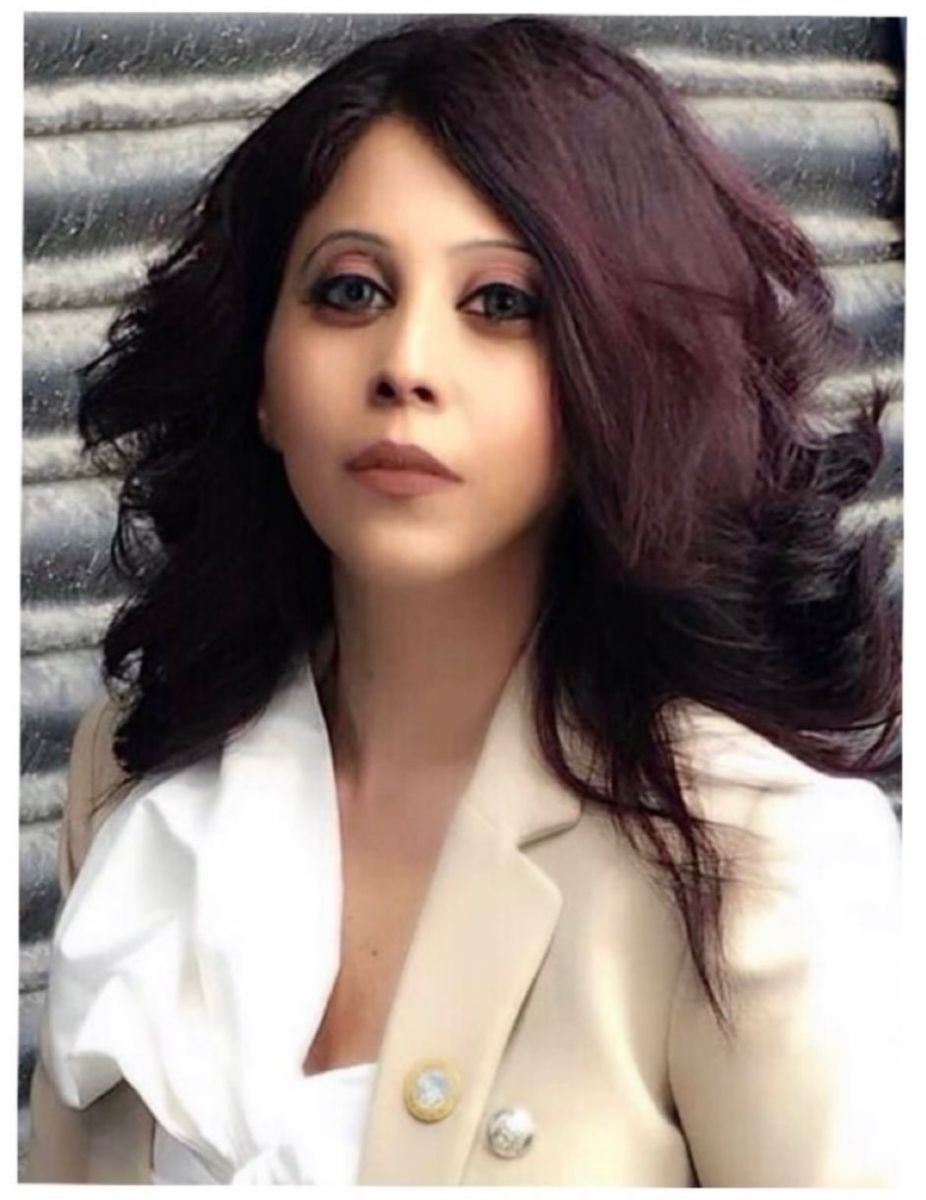
By: Rumana Sinha Sehgal