

A three-year-old girl suffering from a rare and complex infection

A three-year-old girl suffering from a rare and complex infection, Most complicated and important surgery,
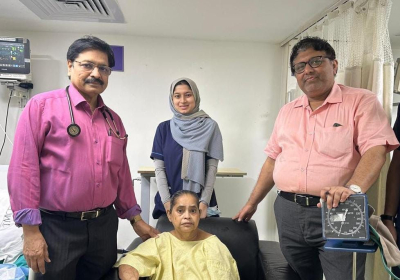
KIMS doctors saved the life of a three-year-old girl with a complicated surgery. Starting with the normal cold, the infection has spread and damaged the neck bones, putting her life in danger. Consultant Orthopaedics and Spine surgeon of KIMS Kondapur Dr K
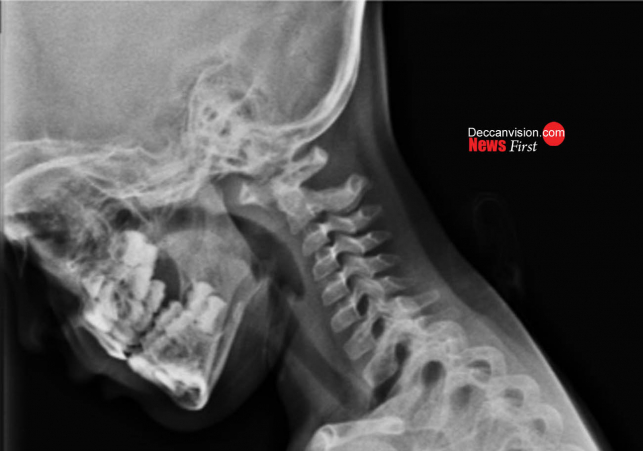
SriKrishna CHAITANYA, Dr AjayKumar paruchuri and Paediatrician of KIMS Cuddles Dr Parag Dekate disclosed the details of the girl's problem and treatment given."Atlanto-axial instability (a condition in which the neck bones are damaged and the neck is unable to stand. Due to this, even if the neck is slightly moved, the problem of breathlessness can lead to a life-threatening condition) which is very difficult to cure in three-year-olds. Their bones are very thin, with a circumference of just 2.5 millimetres. Therefore, it is very difficult to operate them and fix the screws. No implants have yet been designed to fuse the bones of children under the age of three. The three-year-old girl was recently brought to KIMS Kondapur hospital by her parents as she could not keep her neck fixed properly. We found that she had a pyogenic infection at C1 and C2 (Atlanta axial) in her neck bones. We first gave antibiotics to reduce the infection, put a collar around the neck and gave her enough rest. In three months, there has been some improvement, but the neck pain has not completely subsided. On further examination, we found that the bones near her neck were completely damaged and the stability of C1 and C2 was completely lost. She was initially treated for three months in a hollow-vest immobilization procedure. However, her condition did not improve, and she remained unable to stand up along with neck pain. Her parents were deeply disturbed. There are very few such cases in the world. So far, there has not been a single publication regarding treatment of children less than 3 years in India.
In the end, we decided to perform surgery using small screws called Herbert screws to fix her bone. The smallest length is 20 millimetres long and 2.4 millimetres in diameter. A CT scan revealed that the girl's C2 isthmus was 2.6 millimetres in diameter (between the neck and the spine) and 20 to 24 millimetres in length. So we decided to use the screws and fix the small bones. However, by then the infection had spread and the bones had been severely damaged, and there were not enough bones to attach to the joint. So we thought of removing the bone from her mother's pelvis and transplanting it onto the girl.
Finally, we have prepared everything for surgery. We first removed a bone from the pelvis of the mother and implanted intraoperative neural monitoring on the girl and started the surgery. The joint consists of the main blood vessel of the spinal cord on one side (which supplies blood to the brain) and the spine on the other. Using a 2.4 mm Herbert screw system, we installed the screw with the help of guide wires and successfully corrected both the C1 and C2 joints. There were no injuries to any of the surrounding structures and organs. In the first attempt itself, we were able to perform accurate surgery. Atlas cables were also used from the back side to stabilize the attached bone. Artificial DMB and B-TPC have also been used to further increase the fusion. The girl was discharged from the hospital after six days as everything was fine with the X-rays taken after the surgery. This is the first time that people with similar problems have been successfully treated and documented in India, and there are very few in the world. With the use of accurate planning and technology, we have been able to provide a normal life to the child who is in a life-threatening situation again," said Dr K. SriKrishna CHAITANYA, Dr Ajay Kumar and Dr Parag Dekate.